Wednesday, June 15, 2011

Flower Photography - How To Take Good Natural Flower Photos (pt.2)

Author: Dave Kennard

Flowers are a popular subject for photographs, but how can you take good photos that really show off the beauty of a flower? Continuing on from part 1, this article covers several more photography tips to help you take amazing flower photos. The tips cover photographing flowers in their natural surroundings, rather than photographing flowers in a vase or a flower arrangement, which is quite a different affair.

Use a reflector or flash to fill in shadows and help light the flower

If you are photographing a flower where the front of the flower isn't directly lit by sunlight, you can use a reflector or a small amount of fill-flash to help light the flower. You can purchase commercially made reflectors, or make your own by sticking a large sheet of kitchen foil to a piece of cardboard.
Place the reflector so that it reflects light back onto the flower. As well as helping to light the flower, since the light will be reflected from a different direction to the main light, it can help fill in harsh shadows on the flower.
As an alternative to a reflector, or in addition, you may also consider using fill-flash to help light the flower and fill in dark shadows. Make sure you have your flash set at low power, as you only want the flash to contribute a small amount of light to the scene, not become the main light source.

Get in close

If your camera has a macro mode, or you have a DSLR with a macro lens, try getting in close and filling the frame with the flower. And then try getting even closer to isolate just part of the flower. You can find some great abstract compositions when focusing on only a very small part of a flower.
When taking close-ups or macro photographs of flowers, you may need to use flash or long shutter speeds to illuminate the flower. At these very close distances, flash will usually appear relatively soft, and more like natural light.

Prevent the wind ruining your photo

A big problem when taking photos of flowers is that they blow about in the wind. This can cause problems in composing your photo if the flower is constantly moving about. And it will also result in a blurry photo if your shutter speed is not high enough to freeze the motion of the flower.
One thing you can do is to set up a wind break between the flower and the wind. You don't need to lug a full size wind break around with you though. If you have a tripod and diffuser or reflector with you, you can place the tripod between the flower and the wind, and then rest the diffuser or reflector up against the tripod's legs. So long as you're not photographing a tall flower, this should act as a decent windbreak.
Another thing you can do is to secure the flower using an accessory known as a plamp (short for plant clamp). This is a small bendable arm with clamps on both ends. One end clamps to your tripod leg, and the other end clamps onto the flower. This stops the flower blowing about in the wind.

Use backlighting to your advantage

The large majority of flowers have relatively thin petals, and so can make a great photo when backlit. The light shines through the petals, giving them quite a different look to a standard photo.

Look at the flower condition and remove any distractions

There are exceptions to everything, but in the large majority of cases, a photo of an undamaged flower will look nicer than that of a damaged one. If you are in an area with lots of the same flowers, take your time to look at a few of the flowers and try to find the one that is in the best condition.
Pay attention also to what is surrounding the flower, and try to avoid including other elements (such as a random blade of grass) that distract from the flower. Sometimes you may be able to change the angle you are photographing at to remove the distracting elements.
Other times you may need to squash down or remove the distracting elements. If you are photographing outside of your garden, be careful what you are removing though.

Isolate the flower from its surroundings

Set your camera / lens to use a large aperture (e.g. f/2.8) when photographing the flower to help throw the background out of focus. If the space permits, also try using a lens with a longer focal length or zooming in on your camera, and taking the photo from further away. This change in perspective helps to isolate the flower from the rest of the scene.

Article Source: http://www.articlesbase.com/digital-photography-articles/flower-photography-how-to-take-good-natural-flower-photos-pt2-3992368.html

About the Author

http://www.discoverdigitalphotography.com/ offers tips and advice on digital photography. Updated with new articles on a regular basis, Discover Digital Photography covers a wide range of photography styles and techniques, helping you get the most out of your camera.

Tuesday, June 14, 2011

Flower Photography - How To Take Good Natural Flower Photos (pt. 1)

Author: Dave Kennard

Flowers are naturally beautiful, and easy to find in the warmer months of the year, and so make a great subject for a photo. This article covers the top tips to get great photos when photographing flowers in their natural surroundings.

Choose interesting angles

If you want your flower photos to stand out from the crowd, try taking photos from unusual angles, such as looking up.
Generally when taking natural flower photos, you will want to take the photo at slightly above eye level with the flower, ensuring that the centre of the flower can be seen. This will mean crouching down, or for smaller flowers getting the camera right down at ground level.
When photographing flowers at ground level you may need to flatten or remove blades of grass or leaves that would otherwise be in the way between the camera and the flower.

Use natural light and a tripod if needed

For taking photos of flowers in their natural environment you will be best using natural light, and not flash. Natural light will generally give less harsh shadows, and should also ensure that the background behind the flower is lit well.

The best time of the day for photographing flowers is early morning or late afternoon, where the light will be warmer and less harsh than it gets later in the day. The wind is also generally lower at the start and end of the day, meaning you are less likely to get the flower blowing about while you try and take photos of it.

Depending on how well your flower is lit (e.g. if you're shooting a bluebell in woodland then it's probably relatively dark), then you may need to use a tripod to stabilise the camera. When placing the tripod try to be careful not squash other nearby flowers and not to knock the flower you are wanting to photograph. You don't want to find the perfect flower and then knock all its petals off while trying to position your tripod!

For taking photos of flowers during the daytime, try shooting when there is hazy cloud, as the cloud helps diffuse the sunlight. This makes the shadows less harsh and produces a more pleasing photo.

Use a diffuser to diffuse harsh light

If you're trying to photograph a flower under bright daylight, you can use a diffuser to soften the light, and reduce harsh shadows / highlights on the flower. A diffuser is just a thin piece of material or paper that spreads harsh direct light out over a larger area.

You can buy commercially produced diffusers, or make your own. You need some white translucent material, like a plastic bag, tissue paper, or an old T-shirt. Stretch the material over a frame (an old coat hanger bent into a diamond shape works well), and attach it securely.

When photographing the flower, hold the diffuser between the sun and the flower. You should immediately see the reduction in harsh shadows and highlights on the flower.

Landscape style flower photography

When you find a large area covered with flowers, you'll probably want to take a photo of the whole scene. The same rules as standard landscape photography apply here. Try and include some foreground, middle-ground, and background to create a sense of depth and scale. Try and use leading lines and the rule of thirds when composing the photo too. (See the free Top 5 Photography Tips to Improve your Photos report for more detailed composition advice).
If it is windy, make sure you set the camera to use a fast enough shutter speed to avoid the flowers coming out blurry.

Dew covered petals

Flowers covered in early morning dew make an attractive photo, but if you missed the early morning, or there wasn't any dew, you can create your own. If you have a misting bottle or spray bottle, you can use this to create a false dew on the flower.

Article Source: http://www.articlesbase.com/digital-photography-articles/flower-photography-how-to-take-good-natural-flower-photos-pt-1-3992263.html
About the Author

Discover Digital Photography offers photography tips and tricks to help you improve your photos. The Discover Digital Photography website is updated with new articles on a regular basis, covering all types of photography, from macro photography to black and white photography. For more free photography advice and information, check out http://www.discoverdigitalphotography.com/.

Sunday, June 12, 2011

How To Take Good Photos Of Animals

Author: Autumn Lockwood

If you love taking pictures of wildlife then this article will be sure to give you some helpful tips that you can start using today. Animal photography, also called wildlife photography, encompasses the entire world of animals from your pets to polar bears. This article focuses on photographing wildlife, but you can apply many of these tips to photographing Muffin or Fido. To learn how nature photographers get those fantastic images of wildlife, read on.

The basics for taking great wildlife pictures start with these tips. As always there are exceptions, but the following go a long ways towards ensuring successful animal photography:

* Use natural lighting to your advantage

* Fill the frame with the subject

* Focus on the eyes

* Shoot from various angles

* Capture personality

Perhaps you are wondering how you can, without a huge lens and SLR safely get close enough to a wild animal to "capture their personality" or "fill the frame"?

Actually even professional wildlife photographers don't always take their winning photographs in the wild. Many of the photographs of polar bears, tigers and other wild creatures were taken at wildlife sanctuaries and zoos. Cheating? Maybe, but it's safer for the photographer and doesn't disturb their free roaming cousins' mating and feeding cycles.

If you love taking pictures of wildlife then this article will be sure to give you some helpful tips that you can start using today.

Animal Photography Tips for Zoos and Sanctuaries

1) Simplify the Composition: If the background is distracting, use a wide aperture or Portrait mode to blur it. Or use a photo editor like Photoshop to clean up or blur the background.

2) Go Natural: Avoid showing cage bars, fences, humans, signs, etc. If it is safe and not against the rules, point the lens through the gap in the fence so you can take a picture without showing the fence. Sometimes there will be a vantage point that allows you to shoot over the top of the fence. Look for areas like these that are perfect for a photo. Again, use a good photo editing software to blur what you couldn't get rid of while taking your picture.

3) Fill the Frame: Use zoom (optical for best quality) or a telephoto lens to get close ups.

4) Use Sports Mode: Use Sports mode or set shutter speed priority to around 1/250 to freeze movements.

5) Use Light and Weather to Best Effect: Overcast days are often best for animal photography. If the overcast isn't too bright, it will prevent glare from light colored or watery backgrounds. If the overcast is too dark and you have an SLR, raise the ISO. With the right amount of overcast lighting, you can get well exposed sharp images with your compact camera without any of the animals squinting.

Since the eyes are usually the most expressive, they are generally the best place to focus so be patient in getting a picture of their eyes wide open and not squinting. Another way to avoid this problem is to take the picture when the animal's back is to the sun. In this situation, you'll need to use flash fill (turn off the automatic flash and set to "on") to prevent underexposure or a silhouette. You will also need to wear a broad brimmed hat or use a lens hood to prevent lens flare.

6) Try this When Shooting through Glass: When you want a picture of a terrarium or aquarium critter, turn on the flash and shoot from an angle. Be sure to check your camera manual for the safe distance when taking pictures with a flash of any creature otherwise you could damage their eyes. Or turn off the flash and gently press your lens right up against the glass.

7) Plan your Visits for the Best Photo Ops: Many people will especially love seeing your animal photography when it includes baby animals. Often sanctuaries and zoos post on their websites when new babies are arriving, or you can call and check. Another great time to take pictures is during feeding time. Animals that stay in hiding throughout much of the day will come out to eat. Lastly, if you are going to a zoo or sanctuary when the weather is hot, always go early in the day as this will be when the animals are most active.

8) Use Context: While usually it's best to fill the frame with the animal, sometimes the context is too interesting to bypass. Examples of using context include a child and baby animal looking at each other, or a giraffe bending down to look at something.

9) Capture Expressions: Animals, whether our pets or wildlife, make the cutest expressions. Be prepared with your camera! Even just normal expressions like a wolf pup yawning or a tiger licking its lips are cute or interesting. The more you understand the habits and behaviors of the animal you're trying to take pictures of, the better chance you'll have of capturing a great photo of them.

So, the next time you're ready to take some wildlife pictures, use these animal photo tips and you'll be amazed at the difference applying this tips can have on your photos.

Article Source: http://www.articlesbase.com/art-and-entertainment-articles/how-to-take-good-photos-of-animals-1956330.html

About the Author

Autumn Lockwood is a writer for Your Picture Frames and loves taking photos. Shop online and see our selection of unique vintage picture frames and old fashioned victorian picture frames. Visit our online picture frames shop or call 1-800-780-0699.

Saturday, June 11, 2011

Natural Healing through the Hobby of Nature Photography

Author: ForestWander

Abstract

In fast paced lives and busy schedules, finding peace within is critical and not only good for mental wellbeing, but physical health as well. American culture and society is inundated with anti-depressant commercials and propaganda that attempts to sell wellbeing through synthetic solutions. However, taking the time to simply shift attention from the monotonies of career and work pressures, to the beauty  of nature will begin to bring a much longer lasting and more fulfilling peace, which is not accompanied by a long list of side effects.

Introduction

The Hobby of Nature photography as an alternative to synthetic medicine can help those who suffer from anxiety and depression, experience the peaceful beauty of creation. Specifically, nature photography can help separate mankind from common modern day thoughts, helping to focus and meditate on the peaceful harmony that exists in flowers, wildlife, waterfalls, mountains, trees and the sky. Although it is nice to just visit a park or other recreational area, nature photography forces an individual to narrow his or her thoughts on a specific subject while blocking all else out.

Documented Evidence

Studies suggest that "contact with nature seems to be good for health" (American Journal of Public Health [AJPH], 2003) and that "there is evidence that nature views speed recovery among postoperative patients." According to Frumkin (2003), some of the benefits which have been documented state that children with ADD improve their attention, troubled city girls self-discipline improves, there is a lower death rate in elderly, and children in general have stronger emotional stability from mid-childhood to teenage years. These studies prove what God's word has revealed to man for thousands of years "A merry heart doeth good like a medicine" (King James Bible [KJV], 1611), King Solomon wrote several scriptures regarding the affect a merry heart can have on health.

Nature Photography subjects and methods

Flowers

Various subjects exist in nature photography and some may bring more stress relief than others. Flowers for example, have a natural aesthetically pleasing look and can bring to memory wonderfully peaceful scriptures from the Bible.

Jesus taught at the Sermon on the Mount (30 A.D.) Consider the lilies of the field, how they grow; they toil not, neither do they spin: And yet I say unto you, That even Solomon in all his glory was not arrayed like one of these. Wherefore, if God so clothe the grass of the field, which to day is, and to morrow is cast into the oven, shall he not much more clothe you, O ye of little faith? (Matthew 6:28-30)
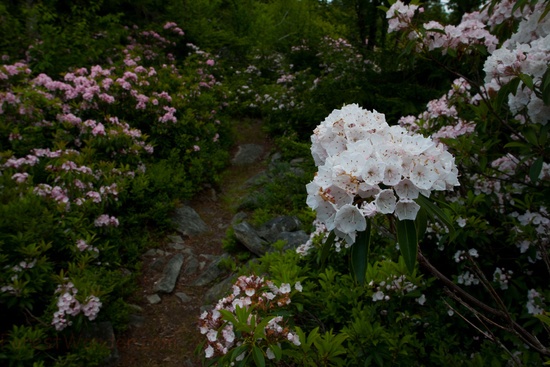
Forestwander.com Mountain Laurel Walking Trail Flowers
Wild Mountain Laurel Flowers in a remote garden wilderness area of Dolly Sods, WV
(Photo Courtesy of ForestWander.com)

Thoughts of provision for our needs, even when we are incapable of helping ourselves seem impossible, where there is little or no faith. However, through considering the flowers, their beauty, and their care from the Heavenly Father it is possible to understand and realize that mankind is made in his image and that he will take better care of man than even the most beautiful rose, through faith.

Waterfalls

When listening to the sounds of rushing water, and watching the magnificent display of power and unyielding strength as it cascades over a precipice; many will experience a peaceful and tranquil feeling. Waterfalls are very beautiful and help to drown out the noise of talking, telephones, music and television. Long exposure waterfall photography (5-30 seconds) adds a surreal effect to the scenic beauty of a waterfall. The results from this type of nature photography are rewarding, very artistic and are highly prized among nature photographers. This advanced nature photography technique requires practice with various settings, and will generate a sense of fun and playing that brings back childhood feelings of happiness and joy.

Forestwander.com Elakala waterfalls
Elakala Waterfalls, Blackwater Falls, WV
(Photo Courtesy of ForestWander.com)

Birds and Wildlife
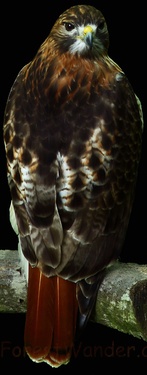
If still subjects and static photography seem uninteresting, then focus can be shifted to wildlife nature photography. Birding for instance, is a very popular area of nature photography that can utilize a new technique called Digiscoping.  This technique typically uses an inexpensive point and shoot camera, combined with a tripod mounted spotting or telescope. Amazing results have been produced with this popular area of wildlife nature photography. Whenever pleasing results are produced after experimenting and testing techniques, confidence and encouragement tend to dispel anxiety and fear.

ForestWander.com Red Tail Hawk perched on a branch
Red Tail Hawk perched on a branch
(Photo Courtesy of ForestWander.com)

Viewfinders opposed to LCD preview screens, reduce external distractions by limiting the area of view that can be seen. Many details cannot be clearly viewed or perceived through an LCD screen although they do work well in situations when it is not possible to use the viewfinder. Whether paying attention to the macro details of a flower petal; or adjusting focus and aperture to capture the clarity of the surround landscape in a waterfall scene, nature photography requires one to clear all other thoughts from their mind.

Reasonable excuses, why not?

Yes, there are a lot of reasons that one may not want to consider nature photography; however, there are just as many answers as to why not? It does not hurt to try a remedy to worries, anxiety and depression, but the effects from not trying will certainly not be any better.

  • I do not live near nature

Even in the most populated metropolitan areas, there are parks and recreation areas where one can begin to experience nature. The possibility to interact with nature is all around, even as close as in the backyards and neighborhoods or the busiest towns and cities.

  • I am allergic to flowers

Most floral photography is accomplished with a telephoto lens or a lens that is zoomed to a telephoto range in order to allow macro photography settings. This would keep a distance from high exposures of pollen.  In addition, it is easy to find a particle mask to cover your mouth and nose when in areas you may be exposed.

  • It is too expensive
Many point and shoot cameras can easily reach resolutions of 8 to 12 mega pixels and can cost as less as $75. It is certainly feasible for anyone to become involved in nature photography.

Conclusion

Natural remedies to health problems have existed for thousands of years, just as long as time itself. Often our society tries to find the answer in deeply founded research and technology, when the answers are already plain and obvious. This natural form of meditation helps to bring a peace within and a rewarded feeling of capturing these moments; allowing reflection at a later time to spark fond memories when times of trouble and worry rise again. Very few hobbies exist that are so rewarding, and actually bring man and woman back into the perspective that was originally intended in The Garden of Eden.

Howard Frumkin, MD, MPH, DrPH. (2003). Healthy Places: Exploring the Evidence.
Vol 93, No. 9 | American Journal of Public Health 1451-1456. Retrieved from
http://ajph.aphapublications.org/cgi/content/full/93/9/1451

King Solomon (900 B.C.). The proverbs of Solomon the son of David, king of Israel
Proverbs 17:22 | King James Bible 1611 translation

Matthew the Evangelist (60-85? A.D.). The Gospel of Matthew
Matthew 6:28-30 | King James Bible 1611 translation

Article Source: http://www.articlesbase.com/wellness-articles/natural-healing-through-the-hobby-of-nature-photography-2487307.html
About the Author

ForestWander Nature Photography
http://www.forestwander.com./
ForestWander Nature Photography Art Gallery
Gallery.ForestWander.com

Friday, June 10, 2011

Nature Photography

Author: searchreadyseo

Nature photography is a wide umbrella that includes landscape photography, wildlife photography, plants, bugs and outdoor subjects in general. But architecture, people, machines tend to be excluded from nature photography.

Nature photography is often the domain of the fine art photographer but is also used for scientific reference, travel photography and can be seen in some of the greatest magazines of all time, such as National Geographic and Audubon publications, illustrating the fascination with nature, either seen from very close up as in macro or microscopic photography or at a distance as in landscape or scenic photography. In the case of wildlife photography, nature photography investigates the life of animals, birds, fish, usually in their natural habitat and can expose us to aspects of the natural world that many of us would never otherwise witness.
Landscape-1-200x300.jpgA wide gamut of equipment is often needed in nature photography. For wildlife, a long telephoto lens is almost essential. For close-ups of the insect world, macro lenses which will give one-to-one magnification and show nature in its infinite detail.

When you think of nature photography, you often think of staring into the eyes of a butterfly at close quarters or seeing the intricate details of the inside of a rose or orchid. This is macro photography. Special flash equipment is sometimes used (ring flash – where the electronic flash goes around the lens) to get even lighting at such close quarters. Lovers of nature photography tend to see details that others miss. The glint of sunlight on a frosty leaf, the patterns made by some plants when you get in really close, and so on. Successful nature photography includes the use of the right equipment which can include the whole range of lenses from extreme telephoto, through wide angle
to macro lenses, a sturdy but lightweight tripod, electronic flash, remote controls and so on.

A sense of lighting, color and composition are all essential to quality results in nature photography. Compare two photos of an eagle taken by different photographers, one an advanced amateur or pro and the other a beginner, and you see right away that beautiful or striking nature photography is not just a matter of being in the right place at the right time, although that is a factor. Patience, particularly in wildlife photographers, can make the difference
between success and failure in nature photography.

So what if all you have is a good point-and-shoot camera – is nature photography out of the question for you? Not at all. Most decent point-and-shoot cameras have macro settings and zoom lenses that give you a fair range from  wideangle to telephoto which can be extended with adapters added to the camera. If you love nature and have an eye, you can get some spectacular shots without recourse to more advanced equipment.

The main skill is in seeing and appreciating what is there and then capturing it as you see it sothat you can share with others.

Read other photography articles here: http://www.smokinphoto.com/photographyarticles/
Article Source: http://www.articlesbase.com/digital-photography-articles/nature-photography-2843467.html

About the Author

SmokinPhoto.com is a photo forum stressing digital photography in all its aspects. You will find articles and information on every kind of photography: wedding photography, baby photography, professional portrait photography, business photography, nature photography, landscape photography, studio portrait photography are just a few of the subjects covered.

Wednesday, June 1, 2011

Save Money on the Hotel When You Go To Take Your Own Nature Photos

When you're ready to head out to take your own nature photos, you can save some money with discount hotel reservations.

Visit someplace awesome, take LOTS of pictures, and let me know how your trip went by leaving a comment below after you get back.

Happy travels!